





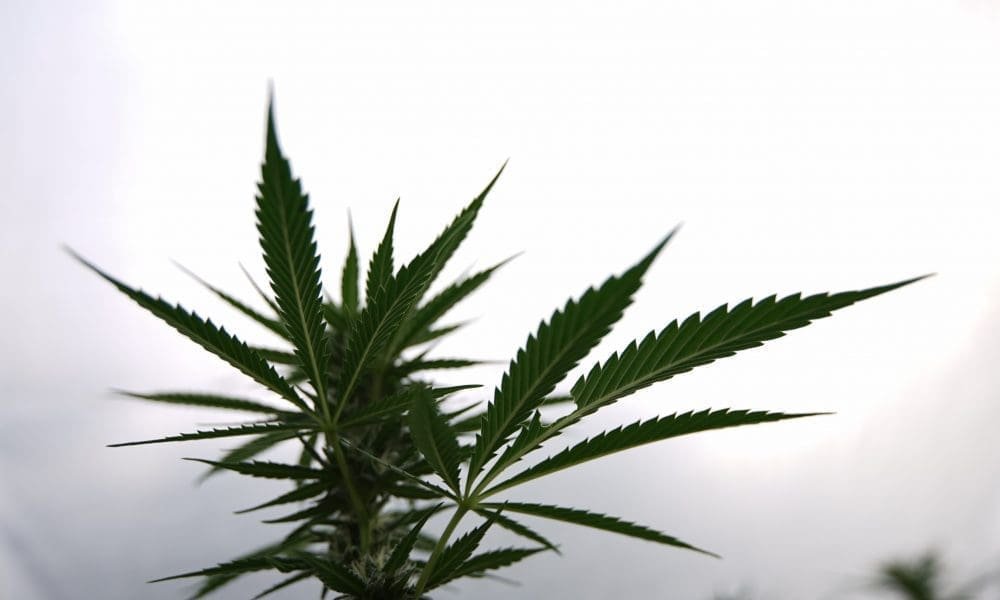

One of the most prominent groups against marijuana is launching a $6 million ad money campaign to President Donald Trump. They are urging him to not move forward on cannabis rescheduling.
Three 30-second television ads, Smart Approaches to Marijuana Action (SAM), claim that rescheduling marijuana would strengthen Chinese cartels and normalize its use. They also say it will undermine „Make America Healthy”, the government’s agenda.
The ads will air on Fox News and Fox Business Network—increasing the likelihood that they could catch Trump’s attention.
Kevin Sabet said, „Rescheduling a cartel’s tax cut,” in a SAM press release. Washington State would benefit by removing marijuana under Section 280E. [Chinese Community Party]Big Marijuana receives major tax incentives, which fuels an industry of addiction for profit that targets children and violates federal laws.”
Section 280E refers to a code of the Internal Revenue Service that prohibits state-licensed marijuana businesses from taking federal taxes deductions as long as marijuana is still categorized under Schedule I. If the Biden administration-initiated process to moving cannabis to Schedule III of the Controlled Substances Act (CSA) is completed, those businesses would be free to take those deductions.
This is a transcription of three statements against rescheduling. ads:
China
China is keeping a close eye on America. Chinese drug cartels have already gotten involved in the marijuana industry, making money while destabilizing our communities. If marijuana is reclassified by activists, this gives China an edge and hurts the American public’s health. It would be a huge tax cut for cartels to reschedule marijuana. President Trump, don’t reschedule marijuana. This is not only a matter of domestic policy. It’s a matter of national security.”
Golden Age
Trump had promised America that a golden age would be ushered in, but by rescheduling pot it will weaken communities and cloud the minds of people. With its toxic impacts felt across our country—causing IQ loss, laziness, psychosis, even suicide—high potency weed damages hearts, minds and futures, especially for the young. America desperately needs a new Golden Age. Don’t let marijuana rescheduling tarnish it.”
MAHA
Washington says that it is working hard to restore health in America. While they discuss red dyes and food additives they are on the brink of a normalization that is even more dangerous. Cannabis with high levels of potency is linked to addiction, psychosis, impaired driving and even death, especially among young people. Today’s so-called ‘legal marijuana’ is full of adulterants, pesticides and GMO ingredients. This is not the way to reverse our nation’s health crisis. Face the truth about weed and make America healthier again. Don’t reschedule marijuana.”
Legalization supporters, of course argue that enacting a reform will undermine illicit markets, contrary to message in new SAM commercials.
SAM continues to argue that rescheduling could have serious consequences. However, reform efforts are stalled. The U.S. Department of Health and Human Services, under former President Joe Biden, recommended the change in policy following a review of scientific evidence. However hearings by the Drug Enforcement Administration were suspended due to disagreements over procedural issues.
While Terrence Cole—who was recently sworn as the new administrator of DEA—said during a confirmation hearing in April that examining the government’s pending marijuana rescheduling proposal would be „one of my first priorities” after taking office, the reform was not included in a list of initial priorities that the agency put out last week once he took office.
Before Cole’s inauguration last week, a Senate vote had given final approval for the Trump nominee a few days earlier. Nearly immediately following the swearing-in, the major marijuana trade association renewed its push for progress in the long-stalled federal cannabis scheduling process.
—
MEDCAN24 tracks hundreds of marijuana, psychedelics, and drug policy legislation in state legislatures as well as Congress. Patreon supporters Pledges of at least $25/month will gain access to interactive maps, charts and a hearing calendar. This way they won’t miss anything.
Find out more about the marijuana bills tracker. supporter on Patreon You can get the access.
—
In May, a Senate committee advanced the nomination of Cole to become DEA administrator amid the ongoing review of the marijuana rescheduling proposal that he has so far refused to commit to enacting.
Cole—who has previously voiced concerns about the dangers of marijuana and linked its use to higher suicide risk among youth—said in response to senators’ written questions at the time that he would „give the matter careful consideration after consulting with appropriate personnel within the Drug Enforcement Administration, familiarizing myself with the current status of the regulatory process, and reviewing all relevant information.”
Earlier this month, meanwhile, DEA again notified an agency judge that the marijuana rescheduling process remains stalled under the Trump administration.
John Mulrooney, DEA Administrative Law Judge and ALJ of the Controlled Substances Act, has been halting hearings for six months on a proposed move to Schedule III from Schedule I under the Controlled Substances Act. This was started by the Biden Administration. In a report submitted to the judge on Monday by DEA lawyers and rescheduling advocates, they said that there is still no agreement.
Robert Murphy, the acting administrator of the DEA, is the only person who can take action at this time on the proposal to reschedule cannabis. Some believe that the proposed rule will be held up until a permanent DEA administrator is confirmed.
Murphy’s appointment as acting administrator wasn’t widely publicized, but he’s replaced Derek Maltz—who subscribes to the „gateway drug” theory for marijuana—in the role.
DEA Administrative Law Judge (ALJ) John Mulrooney—who announced his retirement last week, leaving the rescheduling process entirely to Cole—initially agreed to delay the proceedings after several pro-reform parties requested a leave to file an interlocutory appeal amid allegations that certain DEA officials conspired with anti-rescheduling witnesses who were selected for the hearing.
Originally, hearings on the proposed rescheduling rule were set to commence on January 21, but those were cancelled when Mulrooney granted the appeal motion.
This appeal was filed after the court denied a request that DEA be removed from all rescheduling processes. They argued it had been wrongly identified as the „chief „proponent” given allegations about ex parte communication with witnesses against rescheduling that resulted in „an irrevocable taint”.
Meanwhile, the Justice Department told a federal court in January that it should pause a lawsuit challenging DEA’s marijuana rescheduling process after Mulrooney canceled the hearings.
Also in January, Mulrooney condemned DEA over its „unprecedented and astonishing” defiance of a key directive related to evidence it is seeking to use in the marijuana rescheduling proposal.
It was the DEA’s insistent digital submission of tens or thousands of public commentaries it had received as a response to the proposed regulation to shift cannabis to Schedule 3.
Mulrooney is not shy in calling out DEA for various procedural mistakes throughout the rescheduling.
For example, in December he criticized the agency for making a critical „blunder” in its effort to issue subpoenas to force Food and Drug Administration (FDA) officials to testify in hearings—but he allowed the agency to fix the error and ultimately granted the request.
Relatedly, a federal judge also dismissed a lawsuit seeking to compel DEA to turn over its communications with the anti-cannabis organization.
Mulrooney had separately denied a cannabis research company’s request to allow it to add a young medical marijuana patient and advocate as a witness in the upcoming rescheduling hearing.
Also, one of the nation’s leading marijuana industry associations asked the judge to clarify whether it will be afforded the opportunity to cross-examine DEA during the upcoming hearings on the cannabis rescheduling proposal.
Further, a coalition of health professionals that advocates for cannabis reform recently asked that the DEA judge halt future marijuana rescheduling hearings until a federal court is able to address a series of allegations they’re raising about the agency’s witness selection process.
Separately, the House Appropriations Committee on Tuesday approved a spending bill that contains provisions to block the Justice Department from rescheduling marijuana.
Re-scheduling has generated a lot of public interest. The rescheduling of marijuana from Schedule I to Schedule III would not make it federally legal, but the reform could allow licensed cannabis businesses access to federal tax deductions as well as remove some research obstacles.
Meanwhile, two GOP senators introduced a bill in February that would continue to block marijuana businesses from taking federal tax deductions under Internal Revenue Service (IRS) code 280E—even if it’s ultimately rescheduled.
Aside from the delays in hearings, the new leadership at DEA is also a complicating factor.
Robert F. Kennedy Jr., Secretary of the U.S. Department of Health and Human Services(HHS), has previously expressed his support of legalizing marijuana and psychedelic therapy. But during his Senate confirmation process in February, he said that he would defer to DEA on marijuana rescheduling in his new role.
Separately, former Rep. Matt Gaetz (R-FL) was reportedly photographed reviewing a document that appears to be a draft contract to provide services—including „administration-related guidance”—to a firm affiliated with the major marijuana company Trulieve. The visible portion of the document describes a lucrative bonus if a certain „matter resolves,” with an „additional ‘Super Success Fee'” for other „exclusive policy remedies.”
Last month, the former congressman reiterated his own support for rescheduling cannabis—suggesting in an interview with a Florida Republican lawmaker that the GOP could win more of the youth vote by embracing marijuana reform.
Gaetz also said in May that Trump’s endorsement of a Schedule III reclassification was essentially an attempt to shore up support among young voters rather than a sincere reflection of his personal views about cannabis.
A survey conducted by a GOP pollster affiliated with Trump that was released in April found that a majority of Republicans back a variety of cannabis reforms, including rescheduling. They’re also more in favor of states being able to legalize cannabis without interference from the federal government than average voters.
The Senate has confirmed Trump’s choice of former Florida Attorney-General Pam Bondi to lead the DOJ. During her confirmation hearings, Bondi declined to say how she planned to navigate key marijuana policy issues. As attorney general of Florida, Bondi opposed the legalization of medical marijuana.
Amid the stalled marijuana rescheduling process that’s carried over from the last presidential administration, congressional researchers recently reiterated that lawmakers could enact the reform themselves with „greater speed and flexibility” if they so choose, while potentially avoiding judicial challenges.
A newly formed coalition of professional athletes and entertainers, led by retired boxer Mike Tyson, also sent a letter to Trump earlier this month—thanking him for past clemency actions while emphasizing the opportunity he has to best former President Joe Biden by rescheduling marijuana, expanding pardons and freeing up banking services for licensed cannabis businesses.
Side Pocket Images. Image courtesy Chris Wallis.
MEDCAN24 would not be possible without the support of readers. Consider a Patreon subscription if our marijuana advocacy journalism is what you use to keep informed.
